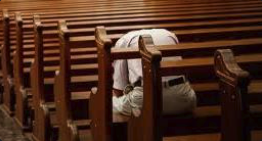
How Christianity Is Being Attacked — and Why It Will Endure
Section 1 — The Reality: Christianity Is Under Unprecedented Attack
The Scale of Persecution Is Staggering
In 2026, Christians are the most persecuted religious group on earth. Over 360 million Christians face high levels of persecution and discrimination. In 40+ countries, persecution is at extreme or very high levels.
— Open Doors World Watch List
360 million
Christians facing persecution globally
13
Christians killed daily for their faith
4,500+
Churches attacked or destroyed annually
62
Countries where Christians face significant discrimination
These are not abstractions. They are fathers imprisoned for Bible studies, daughters sold into slavery for refusing to convert, pastors tortured for refusing to renounce Christ. The global assault on Christianity is one of the great unreported stories of our age — and it demands honest reckoning.
The attack on Christianity is two-pronged. The first is external and violent: physical persecution in Muslim-majority nations, communist states, and regions where Christian minorities are targeted for elimination. The second is subtler but pervasive: the cultural, academic, and media marginalization of Christianity across the Western world — a soft persecution that seeks not to imprison the Church but to render her socially unacceptable, intellectually embarrassing, and morally suspect.
Both must be examined clearly, without self-pity but without flinching. The Faith has faced worse. It has outlasted every previous assault. Understanding why it will outlast these requires understanding what it is actually up against.
Empty pews in the West do not tell the whole story. Globally, Christianity is growing — fastest where it costs the most.
Section 2 — The Cultural Attack in the West
Modern media functions as the pulpit of secular culture — shaping what is admired, what is mocked, and what is permitted to be believed.
Secularism as a Competing Religion
Modern secular culture does not present itself as a religion. That is precisely what makes it effective. But examine it honestly and the structure is identical: it has its own dogmas — moral relativism, the sexual revolution, gender ideology — which are held with fierce, unquestioning conviction. It has its own priests — academics, journalists, and celebrities who pronounce on what is true and what is heresy. And it has its own inquisition — cancel culture and social media mobs that enforce doctrinal conformity with merciless efficiency.
The one thing secular culture cannot permit is a competing absolute claim. Christianity does not offer preferences or lifestyle suggestions. It offers truth — about God, about human nature, about the purpose of life and the reality of death. This is precisely why it must be marginalized. A truth claim cannot be tolerated by a culture that has decided truth itself is a form of oppression.
The Media's Double Standard
Christianity is consistently portrayed in film, television, and media as bigoted, backward, or dangerous. The practicing Christian in popular culture is typically a hypocrite, an abuser, or a fool. Intelligent, educated, reasonable Christians — who constitute a substantial portion of the world's scientists, philosophers, historians, and statesmen — are almost entirely invisible on screen.
No other major religion receives this treatment. Islam, Buddhism, and indigenous spiritualities are typically presented with sympathy, nuance, and cultural respect. Christianity alone is subject to open mockery, unflattering caricature, and suspicion in the mainstream cultural output of the West — the civilization Christianity itself built.
The Academic Siege
Christian students and faculty in secular universities face documented, measurable discrimination. Sociologist George Yancey's research — conducted with rigorous methodology precisely because the academy resists the finding — demonstrates that Christians face more discrimination in academic settings than any other religious or demographic group. Christian viewpoints on human life, sexuality, and moral truth are treated not as positions to be refuted but as disqualifying biases that disqualify their holders from serious intellectual consideration.
The result is a generation of Christians educated to be ashamed of their faith — trained not to engage the intellectual tradition of Augustine, Aquinas, Newman, and Chesterton, but to suppress it as an embarrassment. This is a theft. The Catholic intellectual tradition is one of the richest in human history. Its systematic marginalization in Western universities is a poverty that harms everyone, believer and skeptic alike.
The New Atheists: Rhetoric Mistaken for Argument
In the 2000s, Richard Dawkins, Christopher Hitchens, Sam Harris, and Daniel Dennett rose to cultural prominence with books claiming to have demolished the case for religion. Their approach, however, was not philosophical — it was rhetorical. Mock, ridicule, and dismiss. Present the weakest versions of religious belief and defeat those. Treat the failure to provide a naturalistic account of God as a debunking argument while ignoring the parallel failure to provide a naturalistic account of consciousness, morality, mathematics, or the fine-tuned universe.
When serious philosophers and scientists engaged them directly — John Lennox in debates with Dawkins and Hitchens, William Lane Craig in debates with Harris, Dennett, and others — the intellectual weakness of the New Atheist position became apparent. Lennox, a mathematician at Oxford, methodically dismantled Dawkins' central arguments. Craig demonstrated that the moral argument, the cosmological argument, and the argument from fine-tuning had not been answered — they had simply been ignored or misrepresented. The debates are available online. Watch them. Judge for yourself.
The "Religion Causes Wars" Myth
Perhaps the most persistent cultural accusation against Christianity is that it is uniquely violent — that the Crusades and the Inquisition represent the true face of the Faith. This charge deserves a clear response.
The Crusades were a complex series of military campaigns spanning several centuries, motivated by a mix of religious, political, and economic factors — including a direct response to Islamic conquest of Christian lands. The Inquisition, at its peak, executed approximately 3,000–5,000 people over several centuries in an era when secular courts regularly executed thousands annually for far lesser offenses. These are serious moral blemishes that deserve honest examination. They are not remotely equivalent to what the 20th century produced without Christianity.
Stalin's Soviet Union: approximately 20 million killed. Mao's China: approximately 65 million killed. Hitler's regime: 11 million in the Holocaust; 50 million dead in the war his ideology ignited. Pol Pot's Cambodia: 2 million killed, roughly a quarter of the entire population. These were secular, explicitly anti-religious regimes. They murdered more people in 100 years than all religious wars in recorded history combined. The problem is not religion. The problem is the human heart without God — and the terrifying consequences when the state replaces Him.
The Cost of a World Without God
The 20th century's secular totalitarian regimes — Soviet Communism, Nazi Fascism, Maoist China, Khmer Rouge Cambodia — murdered an estimated 100 to 170 million people. This is what happens when a society removes God and replaces Him with the state. Those who call religion the great source of violence in history have not done the arithmetic of the century that tried hardest to live without it.
Section 3 — The Sexual Revolution and Its Consequences
The sexual revolution of the 1960s and 1970s was not politically neutral. It was explicitly anti-Christian — a deliberate rejection of Christian sexual ethics, framed as liberation. The data from the sixty years since is now in. The experiment has run its course. The results are not ambiguous.
40–45%
Current US divorce rate (was ~20% in 1960)
40%
US children born outside marriage (was 5% in 1960)
63 million+
Abortions in the US since Roe v. Wade (1973–2022)
70%
Of prisoners come from fatherless homes
The Fatherlessness Crisis
The destruction of the two-parent married family did not occur in a vacuum. The consequences fall most heavily on children. Approximately 70% of prisoners come from fatherless homes. 85% of youth in prison. 90% of homeless youth. 63% of teen suicides. These are not statistics from a culture-war pamphlet — they are from the US Department of Justice, the National Fatherlessness Initiative, and peer-reviewed sociological research. The sexual revolution produced a fatherlessness epidemic. The fatherlessness epidemic is producing broken men and women at industrial scale.
The Pornography Epidemic
Pornography is the fastest-growing public health crisis that Western governments are most reluctant to name. Neuroscience has documented that pornography rewires the brain's reward circuitry in ways functionally indistinguishable from drug addiction. It destroys marriages, warps the sexuality of the young, desensitizes men to violence against women, and is the single largest driver of demand in the global sex trafficking industry. The Church has taught for two millennia that the sexual faculty is sacred, that lust is destructive, and that the human person is not an object. Modern neuroscience and clinical psychology are, slowly and reluctantly, arriving at the same conclusions.
The Design Spec for Human Flourishing
The Church's sexual ethics — chastity, marriage between one man and one woman for life, openness to children — are not the arbitrary prohibitions of a repressive institution. They are a design specification for human flourishing, derived from a serious understanding of human nature, human love, and human destiny. The data from sixty years of the sexual revolution is now the most powerful argument for those ethics. Every social pathology the revolution was supposed to eliminate — loneliness, exploitation, broken families, traumatized children — has increased. The Church was right. The evidence is overwhelming.
The Predictive Power of Christian Sexual Ethics
Every major social pathology that destroys lives — fatherlessness, addiction, trafficking, loneliness, suicide — is predicted by abandoning Christian sexual ethics and is mitigated by embracing them. The studies are not controversial among honest social scientists. The only controversy is in acknowledging who saw it coming first.
"The problem with Christianity is not that it has been tried and found wanting. It has been found difficult and left untried."
— G.K. Chesterton
Section 4 — The Persecution of Christians Worldwide
What follows is not a comprehensive account — that would require volumes. It is a representative account: country by country, a factual record of what is happening to Christians in the world today, right now, while this page is being read.
North Korea: The Extreme Case
North Korea is the most extreme case of Christian persecution on earth, topping the Open Doors World Watch List year after year. An estimated 50,000 to 70,000 Christians are held in concentration camps — the most brutal prison system on the planet. Being found in possession of a Bible is sufficient grounds for death or life imprisonment. Christians must practice their faith in absolute secrecy, passing it to their children in whispers. Entire families are imprisoned across three generations for the faith of one member. This is happening now.
Nigeria: Slaughter in Plain Sight
In northern and central Nigeria, Boko Haram terrorists and Fulani militant herdsmen have waged a sustained campaign of murder against Christian communities for over a decade. In 2023 alone, more than 4,000 Christians were killed in Nigeria — the highest figure of any country on earth. Hundreds of churches have been burned. Villages have been massacred. The victims are disproportionately poor, rural Christians whose deaths receive minimal international media coverage. The perpetrators act largely with impunity.
China: Sinicization by Force
The Chinese Communist Party has launched a systematic campaign to bring Christianity to heel. The policy — officially termed "sinicization" — aims to ensure that Christianity in China serves the Party rather than the Lord. In practice, it means removing crosses from church buildings, installing surveillance cameras inside churches, rewriting Scripture to align with Communist Party doctrine (a government-approved version of the John 8 account of the woman caught in adultery ends with Jesus stoning the woman himself), and arresting pastors of house churches who refuse to register with the state. Christians in China must choose between a state-controlled counterfeit of their faith and an underground faith that risks imprisonment.
Pakistan and Iran: Blasphemy as a Death Sentence
In Pakistan, blasphemy laws effectively criminalize leaving Islam or converting to Christianity. A Christian accused of blasphemy — on the word of a single Muslim accuser, with no corroborating evidence required — can face death. Asia Bibi, a Pakistani Catholic woman and mother of five, spent eight years on death row following an accusation that she insulted the Prophet Muhammad. She was eventually acquitted by Pakistan's Supreme Court, but the acquittal itself triggered nationwide riots. She was forced to flee the country in exile. Her story is one among thousands. In Iran, conversion from Islam to Christianity is classified as apostasy and carries the death penalty.
The Middle East: Ancient Christianity in Collapse
The Christian communities of the Middle East are among the oldest in the world — communities that trace their origins to the first century, speaking forms of Aramaic closely related to the language Jesus himself spoke. They are vanishing. Iraq's Christian population stood at approximately 1.5 million in 2003. Following the American invasion, the subsequent rise of sectarian violence, and the emergence of ISIS, it has fallen to approximately 200,000. Syria's ancient Christian communities — monasteries, churches, and towns that have existed since the apostolic era — have been largely destroyed by the civil war. The cradle of Christianity is being emptied of Christians within living memory.
Where Christianity Grows Fastest
The regions where Christianity is growing at the fastest rate — sub-Saharan Africa, China, South Korea, and parts of the Middle East — are precisely those where the cost of faith is highest. Growth follows persecution, not comfort. This is not a new pattern. It is the pattern of the entire first three centuries of Christian history. Tertullian observed it in approximately 200 AD: "The blood of the martyrs is the seed of the Church." Twenty centuries later, the observation remains empirically accurate.
Section 5 — The Attack from Within: Scandal and Unfaithfulness
Amid every scandal and attack, the witness of ordinary faithful Catholics — praying, serving, persevering — remains the Church's most compelling argument.
Honesty requires acknowledging that the Church is not only attacked from without. She has been wounded from within — gravely, repeatedly — by the sins of her own members. To ignore this would be dishonest. To let it be the final word would be a different kind of dishonesty.
The Abuse Crisis: Naming It Clearly
The sexual abuse of children by members of the Catholic clergy is a grave sin and a catastrophic institutional scandal. It must be named clearly and without euphemism. It was evil. It was perpetrated against the most vulnerable. It was enabled by failures of leadership — bishops who prioritized institutional reputation over the protection of children, who transferred predators rather than removing them, who chose silence over justice. The suffering caused is immeasurable, and it is real.
The Church has implemented significant reforms: mandatory reporting protocols, the removal of credibly accused clergy from ministry, independent lay review boards, the Dallas Charter, and the Vatican's norms for episcopal accountability. These reforms are necessary and do not undo the harm done. Both things are true.
What must not follow from the scandal — though it is constantly urged — is the conclusion that the Church's teaching is therefore false, or that Christ did not found the Church, or that God does not exist. These do not follow logically. The sins of members do not refute the truth of the institution's founding any more than corruption in a nation's government refutes the existence of the nation. The argument from scandal is an emotional argument, not a logical one. It deserves emotional compassion and logical clarity in equal measure.
Judging the Church Rightly
The Church's credibility does not rest on the perfect behavior of her members. It rests on the truth of her teaching, the historical evidence for her founding, and the witness of her saints. The Church is a hospital for sinners — not a museum of saints. Christ himself warned that there would be wolves among the shepherds. That the wolves arrived is not a surprise. That the hospital remains open, healing and teaching across twenty centuries, is the miracle worth examining.
The Response to Scandal: Chesterton's Answer
G.K. Chesterton converted to Catholicism in 1922, at a time when the Church's institutional failures were no less visible than they are today. His answer to those who cited clerical corruption as grounds for rejecting the Faith has never been improved upon: "The Catholic Church is the only thing which saves a man from the degrading slavery of being a child of his age." Crises come. Scandals rise and fall. Reformers appear within the Church — Francis of Assisi, Catherine of Siena, Charles Borromeo, John Paul II — and the Church, purified, continues. This is the pattern of twenty centuries. It is not reasonable to expect the 21st century to be different.
"The Catholic Church is the only thing which saves a man from the degrading slavery of being a child of his age."
— G.K. Chesterton
Section 6 — Why Christianity Will Endure
The Promise of the Founder
Jesus of Nazareth made one of history's most audacious claims: "You are Peter, and upon this rock I will build my Church, and the gates of hell shall not prevail against it." (Matthew 16:18) This is either the most presumptuous lie ever told or it is true. History, across twenty centuries, has so far confirmed it. Every empire that has tried to destroy the Church has itself been destroyed. The Church has buried them all and continues.
The Pattern of History
The Roman Empire launched ten major persecutions against Christianity over three centuries. Nero. Domitian. Decius. Diocletian. Christians were burned, crucified, fed to lions, and executed in public spectacles designed to demonstrate the futility of the Faith. The Roman Empire is gone. The Church is not.
The Enlightenment predicted, with considerable confidence, that Christianity would not survive the intellectual advances of the 18th and 19th centuries. Voltaire reportedly boasted that within fifty years, the Bible would be forgotten. The printing press in his own Geneva home was later used to print Bibles. The prediction did not age well.
The Soviet Union spent seventy years and the full resources of a totalitarian state attempting to eradicate Christian faith from its territory. Churches were seized. Clergy were imprisoned and executed. Children were educated in scientific atheism from birth. Christianity survived. It is growing in Russia today, precisely in the regions where the suppression was most intense.
Every age has issued a death certificate for Christianity. Not one has been accurate. The consistent pattern of history is not the decline of the Faith but the embarrassment of its obituarists.
The Empty Tomb Remains
Every argument against Christianity ultimately confronts the same fact: the tomb was empty on the third day, and the disciples — who had fled in terror at the arrest of Jesus — were within weeks proclaiming his resurrection publicly in Jerusalem, the city of his execution, willing to die for that proclamation. The historical evidence for the resurrection of Jesus (examined in detail on our Scholars page) has never been refuted. Alternative explanations — mass hallucination, body theft, swoon theory — have been examined by historians across the theological spectrum and found inadequate.
If the resurrection happened — and the evidence is strong that it did — then no power on earth can ultimately prevail against what God himself has founded. This is not wishful thinking. It is the logical conclusion of taking the historical evidence seriously.
The Blood of Martyrs
Tertullian, writing in approximately 200 AD during a period of Roman persecution, observed: "The blood of the martyrs is the seed of the Church." He meant it descriptively, not merely rhetorically. Wherever Christians are killed for their faith, the Church has historically grown rather than shrunk. The phenomenon has been documented in Rome, in Reformation Europe, in Communist China, in sub-Saharan Africa. Persecution appears to strip away nominal belief while strengthening genuine faith, and the witness of those willing to die for a conviction is — as it has always been — the most powerful evangelistic force in human history.
The Irrefutable Witness of the Saints
Against every attack on the Church stands the witness of the saints: men and women who took the Gospel seriously, who lived it at personal cost, and whose lives produced a beauty and a goodness that no merely human ideology has replicated. Francis of Assisi. Teresa of Avila. Maximilian Kolbe, who died in Auschwitz in the place of a Jewish father. Mother Teresa, who spent fifty years serving the dying in Calcutta and whose private letters revealed decades of spiritual darkness she endured without abandoning her post. These are not the products of a false religion. They are evidence of a transforming encounter with the living God.
The Personal Invitation
If you have read this far and feel something — a pull toward something greater, a dissatisfaction with the flat materialism of the age, a sense that the questions will not stay quiet — that pull is real. Do not dismiss it as sentiment or wish fulfillment. It is the oldest human experience: the creature recognizing the Creator's call. Augustine of Hippo, one of the greatest intellects in Western history, described it with a precision that has never been surpassed:
"You have made us for yourself, O Lord, and our heart is restless until it rests in you."
— St. Augustine, Confessions (c. 397 AD)
The Faith under siege is not a Faith in retreat. It is a Faith being purified — stripped of the comfortable, the nominal, and the convenient, refined to its essential truth. What remains is what has always remained: the risen Christ, the sacraments he instituted, the Church he founded, and the invitation — urgent, personal, and still open — to follow him.
"Be not afraid!"
— St. John Paul II
Go Deeper
The case for the Faith is not made by passion alone. Explore the evidence — historical, scientific, philosophical — across the rest of this site.