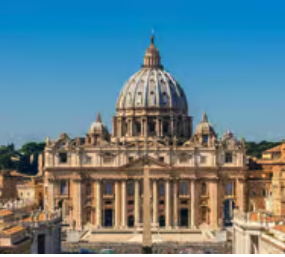
1. Jesus Founded a Church, Not a Bible
The most common assumption in modern Christianity is that Jesus handed his followers a book — that the Bible is the bedrock of the faith and the sole source of authority. But this is historically backwards. When Jesus walked the earth, there was no New Testament. There were no Gospels. There were no Epistles of Paul. The New Testament as we know it did not exist as a compiled canon until the late 4th century — and it was the Catholic Church, through Her councils, that formally defined which books belong in it.
What Jesus did found — explicitly, deliberately, with formal language — was a Church. His words to Simon are among the most consequential in all of Scripture:
"You are Peter, and on this rock I will build my Church, and the gates of hell shall not prevail against it. I will give you the keys of the kingdom of heaven, and whatever you bind on earth shall be bound in heaven, and whatever you loose on earth shall be loosed in heaven." — Matthew 16:18–19
This is not metaphor or poetry. Jesus used the Aramaic word Kepha — "rock" — as a proper name for Simon, a word never used as a personal name before this moment. He gave this man authority: the keys of the kingdom, the power to bind and loose. He then sent out the Apostles to "teach all nations" (Matthew 28:19) — not to write a book, but to preach, baptize, and govern the community of believers.
The New Testament was written within the Church, by Church leaders, for Church communities. It presupposes the existence of the Church. The Church did not derive her authority from the Bible; the Bible derives its authority from the Church that produced, preserved, and canonized it.